GCr15 is the most widely used high-carbon chromium bearing steel in the world. It offers an excellent balance of high hardness, wear resistance, and contact fatigue strength, making it the standard material for bearings and precision mechanical components. At WJY Bearing, we supply GCr15 steel in various sizes, primarily as round bars for further processing.
Chemical Composition of GCr15
The performance of GCr15 steel is determined by its precise alloy formulation. The table below outlines the key elements and their typical percentage ranges:
| Element | Symbol | Content (%) |
|---|---|---|
| Carbon | C | 0.95 – 1.05 |
| Chromium | Cr | 1.40 – 1.65 |
| Silicon | Si | 0.15 – 0.35 |
| Manganese | Mn | 0.25 – 0.45 |
| Phosphorus | P | ≤ 0.025 |
| Sulfur | S | ≤ 0.025 |
The high carbon content ensures excellent hardenability, while chromium improves both hardenability and corrosion resistance. Strict control of impurities like phosphorus and sulfur is maintained to prevent grain boundary weakness.
Key Properties of GCr15 Steel
When properly heat-treated, GCr15 exhibits a range of properties that make it indispensable in bearing manufacturing:
- High and Uniform Hardness: After quenching and low-temperature tempering, GCr15 can achieve a hardness of HRC 61–65, with excellent uniformity even in larger cross-sections.
- Excellent Wear Resistance: The combination of hard carbides and a tempered martensitic matrix provides outstanding resistance to rolling contact fatigue and abrasive wear.
- Good Contact Fatigue Strength: This is the critical property for bearing applications, allowing the material to withstand millions of stress cycles without spalling.
- Satisfactory Machinability: In the spheroidized-annealed condition, GCr15 can be readily machined into rings, rollers, and balls before final hardening.
Standard Heat Treatment Process
The full potential of GCr15 is unlocked through a precise three-step heat treatment cycle:
- Spheroidizing Annealing: Softens the steel for machining and cold forming. The typical structure becomes spherical carbides in a ferritic matrix.
- Quenching: Heating to 830–860°C followed by oil quenching transforms the structure into hard martensite.
- Tempering: A low-temperature temper (150–180°C) relieves internal stresses while retaining high hardness (typically 60–64 HRC).
Common Applications of GCr15
While best known for bearings, GCr15 is also used in various precision engineering components. Typical applications include:
- Ball bearings and roller bearings (races, balls, rollers)
- Cold heading dies and cold extrusion punches
- Measuring tools such as calipers and gauges
- Precision spindles and guide rails
- Molds for plastic forming
Available Sizes from WJY Bearing
We supply GCr15 bearing steel in the form of hot-rolled or forged round bars, suitable for further processing. Below are our standard stocked diameters:
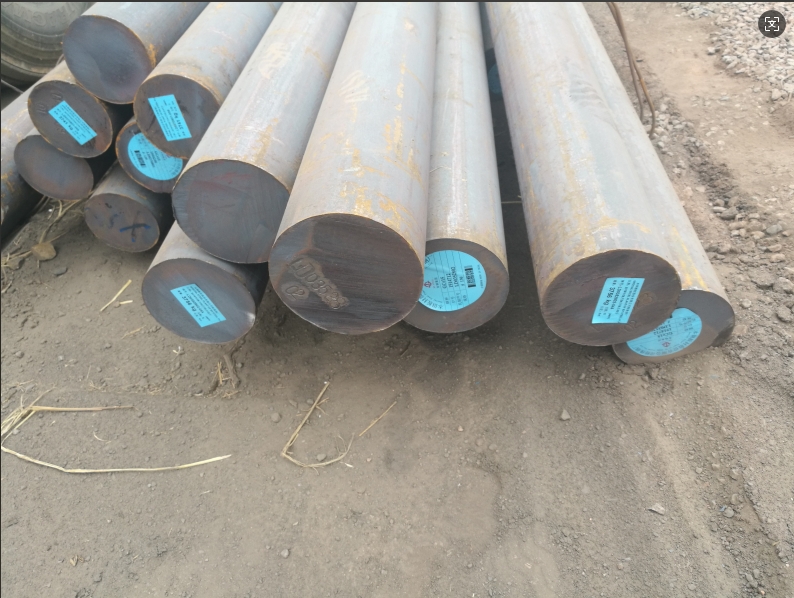
| Diameter (mm) | Form | Typical Condition |
|---|---|---|
| Φ10 – Φ20 | Round bar | Hot-rolled, annealed |
| Φ21 – Φ35 | Round bar | Hot-rolled, annealed |
| Φ36 – Φ50 | Round bar | Forged, annealed (upon request) |
For sizes outside this range or special requirements (e.g., precision-ground bars), please contact our sales team.
Important Considerations When Using GCr15
To achieve optimal results with GCr15 bearing steel, keep the following points in mind:
- White Spot Sensitivity: GCr15 is sensitive to hydrogen embrittlement (white spots). Proper ingot cooling and vacuum degassing are essential to avoid internal cracks.
- Welding Limitations: Due to its high carbon content, GCr15 has poor weldability. Mechanical joining or brazing is recommended over fusion welding.
- Residual Copper Control: Copper content should be kept below 0.20% to prevent hot shortness during forging.
- Surface Decarburization: Pay attention to decarburization during heat treatment; protective atmospheres or post-grinding may be required for critical dimensions.
At WJY Bearing, we provide high-quality GCr15 bearing steel with consistent chemical and mechanical properties. Our materials are suitable for bearing rings, rolling elements, and other demanding applications. If you have specific technical requirements or need a custom size, feel free to contact us.