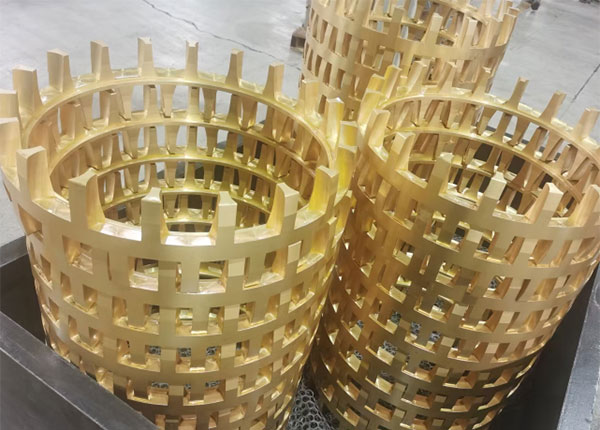
A bearing cage, also known as a bearing retainer, is a critical component within a rolling element bearing. Its primary function is to separate the rolling elements (such as balls or rollers) from one another. By maintaining an appropriate distance between these elements, it reduces friction, prevents collision, and ensures smooth operation of the industrial bearing.
In modern bearing production, the cage plays a vital role in improving efficiency, stability, and service life. As an experienced bearing manufacturer, selecting the right cage design and bearing material is essential to ensure long-term performance, especially in high-load and high-speed applications.
Why Bearing Cages Are Important in Industrial Bearings
Although often overlooked, the bearing cage directly affects the performance of a precision bearing. Without a properly designed cage, rolling elements may collide, generate excessive heat, and lead to premature failure.
In heavy-duty applications such as mining equipment, crushers, and conveyors, the cage ensures that rollers move evenly and maintain proper load distribution. This is especially important in spherical roller bearings like the 222 Series spherical roller bearings, where stability and alignment are critical.
- Reduces friction between rolling elements
- Maintains even load distribution
- Prevents wear and overheating
- Improves bearing lifespan
- Enhances operational stability
Types of Bearing Cages
1. Machined Cages
Machined cages are typically made from brass or steel and are used in high-performance applications. These cages are manufactured through precision machining processes, allowing for complex structures and high dimensional accuracy.
They are commonly used in heavy-duty industrial bearing applications such as crushers, gearboxes, and large rotating machinery. Their strength and durability make them ideal for high-speed and high-load environments.
2. Stamped Cages
Stamped cages are produced from sheet metal, usually steel or stainless steel. They are cost-effective and widely used in general machinery where operating conditions are less demanding.
Due to their lower production cost, stamped cages are commonly found in standard equipment and light industrial applications. However, they may not provide the same level of performance as machined cages in extreme conditions.
3. Injection-Molded Cages
Injection-molded cages are made from engineering plastics and offer advantages such as low weight, corrosion resistance, and self-lubricating properties. These cages are increasingly used in applications where reducing weight and noise is important.
They are also suitable for environments where lubrication is limited or where corrosion resistance is required.
Bearing Cage Applications in Heavy Industry
Bearing cages are widely used across various industries, particularly in equipment exposed to heavy loads and harsh environments.
- Crusher bearings in mining equipment
- Vibrating screen bearings for material classification systems
- Cement mill bearings in cement production lines
- Conveyor systems and material handling equipment
For example, in vibrating machinery, cage design must accommodate continuous dynamic loads. You can explore more about this in our guide on vibrating screen bearings.
How Bearing Material and Production Affect Cage Performance
The performance of a bearing cage depends heavily on both bearing material selection and bearing production processes. High-quality materials such as brass, steel, and advanced polymers ensure durability and resistance to wear.
One critical process is bearing heat treatment, which improves hardness and fatigue resistance. Proper heat treatment ensures that the cage can withstand continuous stress without deformation.
Advanced manufacturing techniques used by professional bearing manufacturers also improve cage precision, ensuring better alignment and smoother operation in precision bearings.
Future Trends in Bearing Cage Technology
With the advancement of industrial technology, bearing cage design continues to evolve. Manufacturers are increasingly using high-performance composite materials and advanced engineering plastics to improve strength while reducing weight.
Additionally, simulation tools such as finite element analysis (FEA) and computational modeling are being used to optimize cage structures. These innovations allow bearings to perform reliably under extreme conditions, including high speeds, heavy loads, and harsh environments.
Conclusion
A bearing cage is far more than a simple supporting component. It plays a crucial role in ensuring the performance, reliability, and lifespan of an industrial bearing.
From material selection to manufacturing precision, every aspect of cage design contributes to the overall efficiency of the bearing. As a professional bearing manufacturer, understanding and optimizing cage performance is essential for delivering high-quality precision bearings for modern industrial applications.
If you are looking for reliable bearing solutions, explore our full range of industrial bearings designed for demanding environments.